Written in collaboration with María Marced Chair of the European Commission’s Industry Advisory Group and Chairwoman of the GSA European Executive Forum
-
Spain Strengthens Its Semiconductors Industry
Semiconductors underpin the digital economy. They are found in mobile devices, vehicles, telecommunications networks, data centres, medical equipment, energy systems, satellites, critical infrastructure, and AI applications.
The semiconductor industry has become a key pillar of technological sovereignty and industrial competitiveness in Europe. The continent is seeking to strengthen its industry by reinforcing supply chains and reducing external dependencies. In this new landscape, Spain aims to secure a strategic position within the European semiconductor ecosystem.
Spain is boosting its position in the European semiconductor industry through the Strategic Project for Microelectronics and Semiconductors (PERTE Chip). This initiative mobilises €12.25 billion to enhance industrial, technological, and research capabilities.
The country benefits from a strong scientific base, emerging capabilities in chip design and supercomputing. Industrial expertise in sectors such as automotive and energy, and leading centres specializing in microelectronics and integrated photonics.
Spain is estimated to concentrate around 10% of Europe’s semiconductor and microelectronics talent, including researchers, engineers, and highly qualified professionals.
Initiatives such as the Deep Tech Spain Strategy 2026–2030 and the Spanish Society for Technological Transformation (SETT) have gained momentum in recent years, helping channel investment and strengthen industrial and technological capabilities. At the same time, the industry association AESEMI is playing an important role in giving visibility to and bringing together the national semiconductor ecosystem. Semiconductors are one of Spain’s major strategic priorities for the coming years.
-
European Chips Act 2.0
The future European Chips Act 2.0 represents a shift in approach compared to the first semiconductor legislation. While the initial phase focused primarily on strengthening manufacturing capacity and supply chain resilience, the new proposal expands Europe’s ambitions across the entire value chain. Placing greater emphasis on chip design, industrial demand creation, company scaling, and stronger connections between manufacturers and advanced technology users.
This new framework focuses on Europe’s key industrial sectors, including automotive, AI, telecommunications, defense, healthcare, advanced manufacturing, and quantum computing. The objective is to ensure that European demand acts as a growth engine for the continent’s semiconductor ecosystem. To achieve this, the European Commission proposes specific demand stimulation mechanisms, known as Demand Accelerators, while also reinforcing support for chip design and innovation in strategic technologies.
The proposal broadens the scope of First-of-a-Kind (FOAK) projects, which would no longer be limited to large manufacturing facilities. They would encompass strategic activities across the entire value chain, from materials and equipment to advanced design, packaging, and emerging technologies. It also introduces the category of Strategic Projects, designed to accelerate investments considered critical for European competitiveness and technological sovereignty through streamlined procedures and priority access to public and private funding.
The proposed 28th Regime (EU Inc.) aims to create a new generation of European technology companies capable of competing with the speed of scaling and fundraising capacity seen in the US and China.
It is also worth highlighting the influence of Enrico Letta’s report on the Single Market and Mario Draghi’s report on European competitiveness. Both have helped reshape the EU’s industrial policy by advocating for a more integrated Europe, greater investment capacity, reduced regulatory fragmentation, and stronger support for strategic technologies such as semiconductors. These reports have become the conceptual framework for a new phase focused on strengthening Europe’s technological sovereignty and global competitiveness.
-
Valencia: A Hub for Microelectronics & Photonics
The development of the semiconductor industry does not only depend on large investments or manufacturing infrastructure. It also requires specialised talent, advanced research, technology companies, universities closely connected to industry, and collaborative networks capable of transforming knowledge into real-world projects. Valencia brings together all these elements and has established itself as a key hub within Spain’s semiconductor landscape.
Thanks to a highly specialised business ecosystem, Valencia has become one of Spain’s leading hubs for microelectronics and photonics. The region hosts international and technology firms such as Analog Devices, MaxLinear, ams OSRAM, VLC Photonics, and DAS Photonics, among others, all of which contribute to the local ecosystem through chip design, integrated photonics, and advanced industrial technologies.
Furthermore, Valencia concentrates more than 50% of Spain’s talent in microelectronics and photonics.
The region’s business ecosystem is complemented by the key role played by the Universitat Politècnica de València (UPV) and the University of Valencia (UV). Both contribute to talent development, applied research, and knowledge transfer to industry. These institutions are part of the ecosystem promoted by the Valencia Silicon Cluster (VaSiC) which coordinates cooperation among universities, research and technology centres, public administrations, and other specialised stakeholders.
This positioning has been reinforced through the creation of three Semiconductor Chairs: Microelectronic Design and Photonic Chips at UPV, and Advanced Materials for the Microchip and Semiconductor Industry at UV. These initiatives help train specialised talent, bring academia closer to industry needs, and strengthen the city’s ability to attract strategic projects.
Valencia’s entry into ALLPROS, the European alliance bringing together key stakeholders across the processor and semiconductor value chain, represents a strategic step toward increasing its visibility at the European level. Participation in this alliance will connect the Valencian ecosystem with European working groups focused on talent, supply chains, automotive, and industrial technology. Aligning local capabilities with the objectives of the European Chips Act while increasing opportunities for collaboration, investment, and international positioning.
-
Valencia Silicon Cluster: The Voice of Valencia’s Semiconductor Industry
The Valencia Silicon Cluster (VaSiC) serves as the meeting point for the local semiconductor, microelectronics, and photonics ecosystem. Its mission is to foster cooperation, attract talent and investment, support knowledge transfer, and enhance the sector’s industrial competitiveness. At a time when Europe seeks to strengthen its technological autonomy, VaSiC helps organise and showcase Valencia’s capabilities, connecting university research with real industry needs.
The Valencia Silicon Forum, organised by VaSiC, has become an international benchmark event. It brings together professionals, companies, institutions, and experts to discuss innovation, investment, talent, and opportunities in the sector. The forum promotes synergies between industry, academia, and public administration, creating a favorable environment for sustainable sector growth in Valencia and Spain.
At the third edition of the Valencia Silicon Forum, held in June 2026, 18 companies were part of the cluster. Including Analog Devices, ams OSRAM, Celestica, DAS Photonics, Emxys, FLYA, Hamamatsu Photonics, Hitachi / VLC Photonics, iPronics, MaxLinear, Nax Solutions, Numascale, Openchip, Power Electronics, Quibim, SuperNode, Tensor Medical, and Bosch.
During this edition, Valencia’s Mayor announced the launch of a Semiconductor Talent Accelerator, A pioneering initiative designed to attract, train, and retain the next generation of industry professionals. The programme will provide specialised training, international mentoring, and direct connections with leading companies, research centres, and startups. It is a city initiative developed together with VaSiC.
This momentum is also reinforced by the International Semiconductor Campus project, led by VaSiC and Femeval, with a planned investment exceeding €50 million. The campus will combine advanced training programmes, experimental laboratories, pilot manufacturing facilities, startup accelerators, and VC funds for university spin-offs.
-
María Marced: The Valencian Engineer at the Forefront of the Global Semiconductor Industry
María Marced is one of the most influential Spanish figures in the semiconductor industry. As a Telecommunications Engineer from Valencia, she has built a distinguished international career with companies such as Intel and TSMC, holding senior executive positions across Europe and becoming a leading voice within the sector.
Her influence extends beyond the private sector. María chairs the European Commission’s Industry Advisory Group (IAG), which brings together major industry stakeholders and has contributed recommendations for the future EU Chips Act 2.0. Through this role, she has advocated a vision in which Europe not only invests in manufacturing facilities. But also strengthens the foundations of the ecosystem through design capabilities, industrial demand, startups, talent development, and more agile public policy execution.
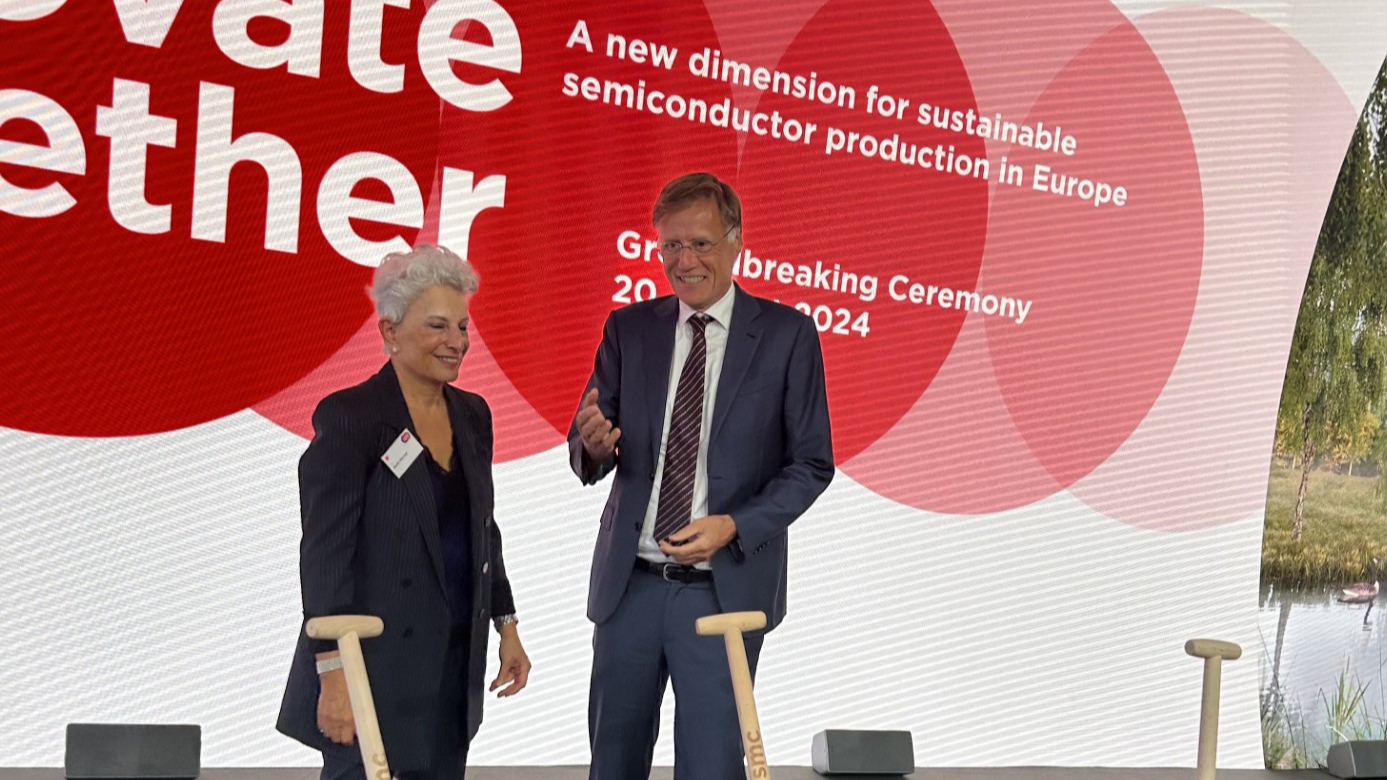
In Spain, her work has also been linked to the development of the PERTE Chip initiative. She is also Chair of the GSA European Executive Forum in Munich and regularly participates in T30 Europe in Milan, one of Europe’s leading forums shaping the future of the semiconductor industry. In August 2024, she attended the groundbreaking ceremony of ESMC’s semiconductor plant in Dresden, and in 2025 she received the Valencia Digital Summit recognition from the Mayor of Valencia.
-
What Does This Leading Role Mean for Firms Looking to Invest?
Valencia’s position in microelectronics, photonics, and semiconductors represents a significant opportunity both for sector-specific and technology firms seeking to grow within a specialised environment. The city combines highly qualified talent, leading universities, international companies, research centres, and a well-coordinated semiconductor ecosystem with future potential.
For investors, this means access to an environment where technical talent is available, collaboration opportunities exist with universities and research centres, connections can be established with industry players, and participation in a fast-growing value chain is possible. The momentum created by PERTE Chip, European semiconductor policies, and local initiatives further enhances the city’s appeal.
This leadership is relevant because Valencia is home to several sectors with strong local roots and significant demand for semiconductor-based solutions. Automotive, energy, power electronics, aerospace, and defense all represent strategic fields where microelectronics, photonics, and semiconductor technologies can generate new opportunities for innovation, business attraction, and industrial collaboration.
The partnership between VaSiC, Valencia City Council, València Innovation Capital, and Invest in Valencia plays a key role in advancing the cluster’s industrial vision while strengthening international promotion, talent attraction, and investment initiatives. At Invest in Valencia, we focus on attracting international companies, facilitating their integration into the local ecosystem and soft-landing process, while showcasing Valencia’s leading role in microelectronics, photonics, and semiconductors.